How Lenders Evaluate Master-Planned Community Development Loans
When lenders evaluate horizontal land development loans, they are not underwriting stabilized real estate. They are underwriting future housing demand and execution risk.
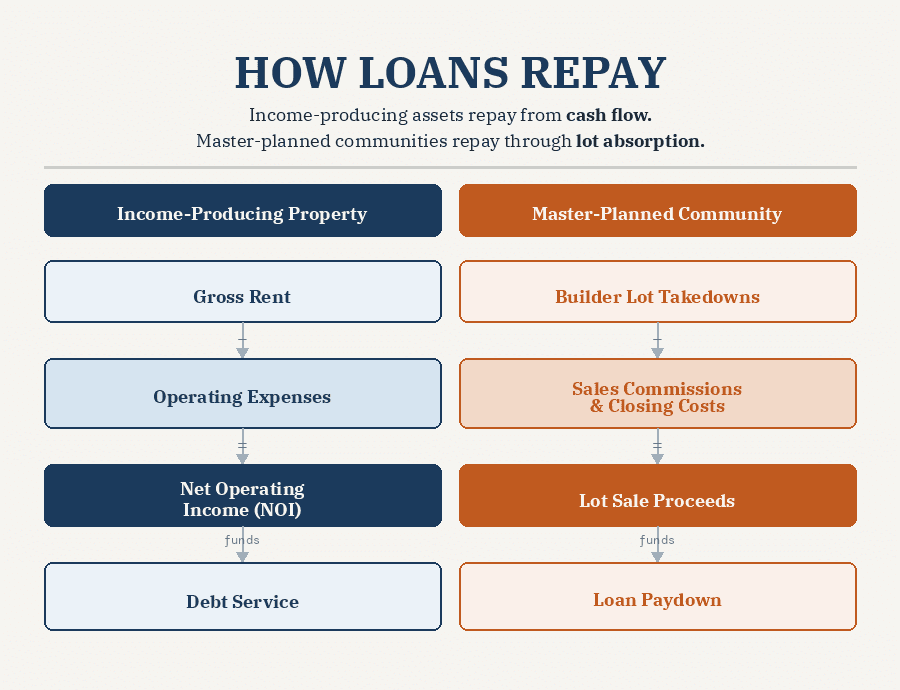
Unlike stabilized assets that generate recurring operating income, master-planned communities typically repay debt through the sale of lots to homebuilders. Because of this, the underwriting framework differs from traditional income-producing real estate.
But like most loans, the key question remains the same: How visible is the path to repayment?
Builder Contracts and Demand Visibility
One of the most important signals lenders look for is builder participation. Contracts, letters of intent, and non-refundable deposits from homebuilders provide early validation that the community has real market demand. More importantly, they create visibility into how the loan may pay down over time.
Lenders typically focus on:
Builder purchase agreements or takedown contracts
Letters of intent from multiple builders
Hard deposits or earnest money commitments
A clear lot delivery and takedown schedule
The more visibility lenders have into future lot absorption, the easier it becomes to evaluate how the loan will deleverage.
Entitlement and Development Risk
Another major underwriting consideration is entitlement risk. Most lenders prefer to enter projects after entitlements are secured, meaning zoning approvals, subdivision maps, and development rights are already in place. Entitlement processes can introduce significant uncertainty around timing, approvals, and development costs. Once entitlements are finalized, the project shifts from regulatory risk toward execution risk, which lenders are generally more comfortable underwriting.
Project Advancement and Capital in the Ground
Lenders also consider how far along the project has progressed. Early-stage land development carries significant uncertainty around infrastructure costs, market demand, and execution timelines. Projects that have already advanced through early development phases are typically easier to finance.
Examples of de-risking milestones include:
Major infrastructure and utilities already installed
Initial development phases completed
Builders actively constructing homes
Early home sales validating pricing assumptions
Another important factor is how much capital has already been invested into the project. Significant infrastructure spending and sponsor equity demonstrate alignment and reduce completion risk for the lender.
Absorption and Phasing
Even with strong builder contracts in place, lenders also pay attention to the pace at which homes are selling within the community. Homebuyer demand ultimately drives the entire development cycle. When builders are able to sell homes quickly, they replenish inventory by pulling permits and purchasing additional lots from the developer. As a result, home sales velocity often becomes a leading indicator of future lot absorption.
For this reason, lenders often look for evidence that housing demand in the community is already being validated. Indicators may include:
Builders consistently selling homes each month
Strong sales velocity in early phases
Pricing that supports builder profitability
Low levels of unsold home inventory
These signals demonstrate that demand for finished homes is strong enough to sustain ongoing lot takedowns.
Additionally, phased development strategies can further reduce risk by allowing infrastructure and lot delivery to occur incrementally. As each phase is completed and absorbed, the loan balance can begin to decline, gradually reducing lender exposure.
Concluding Insight
Horizontal development loans ultimately depend on the visibility of repayment. Because these projects lack operating income, lot sales become the mechanism that drives loan deleveraging. Builder contracts, home sales velocity, and phased lot delivery therefore become central to underwriting. The clearer the path to lot absorption and loan paydown, the easier it is for lenders to evaluate risk and provide capital.